
Hello
Regenerative agriculture at East Lowfields
Our approach to everything we are trying to do at East Lowfields centres around Regenerative Agriculture, or ‘Regen’ for short. Being new to farming, we've been able to do a lot of research and Regen is absolutely what we want to do. Here is a bit of an overview of what we know already about Regenerative Agriculture:
Why are we farming regeneratively?
Happiness
Our animals
Happiness

Nature makes us happy. Having an approach to farming that mimics nature would add to that. More nature for us equals more happiness. Simple! Our farm is first and foremost our home and we want to look outside and feel pride in the decisions we are making.
Cost
Our animals
Happiness
We started with very little money due to needing to sell our old house. Regen doesn't need 101 different bits of machinery and how to impact the land with them. Instead, it's about observation and using animals to impact the land positively. This doesn't cost much to do.
Our animals
Our animals
Learning from the past
Our animals support the Regen approach beautifully. We have plenty of diversity in our animals and they all love to do the work for us. They cut the grass, weed, fertilise the land and improve our top soil. We just need to help them move to fresh ground every couple of days and give them plenty of love.
Learning from the past
It's obvious when you think about it
Learning from the past
Much of today's farming comes from the legacy of World War II - barbed wire, tank-like machinery, nitrogen to name a few. Also, health is such an issue in the UK and over 80% of health issues are linked to diet. It's important to change so we do what is right for the planet and right for our gut health.
Our duty to the land
It's obvious when you think about it
It's obvious when you think about it
Basic observation of our land shows that it has been overgrazed and generally mistreated for years. The soil is compacted and water doesn't absorb into the soil, whilst running off too quickly as well. Our farm and us can evolve together. We are not in a rush to impose our will on the land. We would rather let nature show us.
It's obvious when you think about it
It's obvious when you think about it
It's obvious when you think about it
We want to leave things better than we found them and Regen is the way to do this. If we improve the soil, the land around us and the produce that comes from the farm, it will obviously lead to better health.
We see Regen as the way East Lowfields - and the world around us - needs to go.
Our journey with Regen so far
Integrating animals
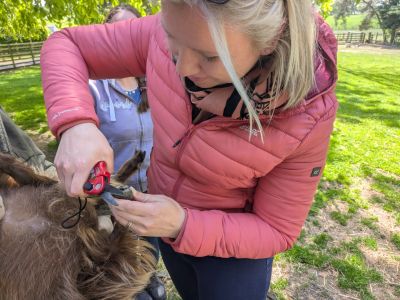
We have started to put together our plan on the areas around our farm. We have left a lot of our land alone to encourage it to develop naturally and we are seeing a positive difference there. We have also started to move our goats every two days using electric fencing. They graze the area we give them for two days (we put them to bed overnight) and then four days after the goats have grazed an area, we put the chickens in the same space.
No dig market garden
We have also started to create a market garden which will focus on ‘no dig’ principles. We planted a few things in 2026 but by 2027, the whole garden will provide our family with as much of the produce we need. We also hope to sell some as well.
Retaining water and creating better natural habitats
We currently have plans for several ponds on the land and we are putting together a tree-planting application. One of our fields has been made into a wildflower meadow and, in 2027, this will be rotationally grazed by our animals. We have also started to restore hedgerows and in 2025, we added two beehives and, in 2026, this grew to six.
Wildlife choosing our farm
The impact of what we've done (or not done) is clear to see. We have so much more we want to do but our river is cleaner - shown by the presence of a family of otters - and the plant life across the farm is so much healthier. There are lots more insects, bees (as well as our own), birds, butterflies, deer and the odd stoat.
Starting to make profit
Our animals seem to love life at the farm and, because we are letting things happen naturally, most of the money we earn through egg and honey sales is profit. It's a tiny amount of money but it's a start.
Most importantly, we’re happy and we’re enjoying it!
Our vision for the future
We've loved reading, listening to and watching everything we can find on Regen and the central message is that it is not a destination: it is a journey. Our aim is always to improve things and we hope that we can do that on our 20 acres. Longer term, we hope to provide our family and our customers with more and more nutrient-dense produce and also share our growing expertise with others to encourage others to embrace the principles of Regen.